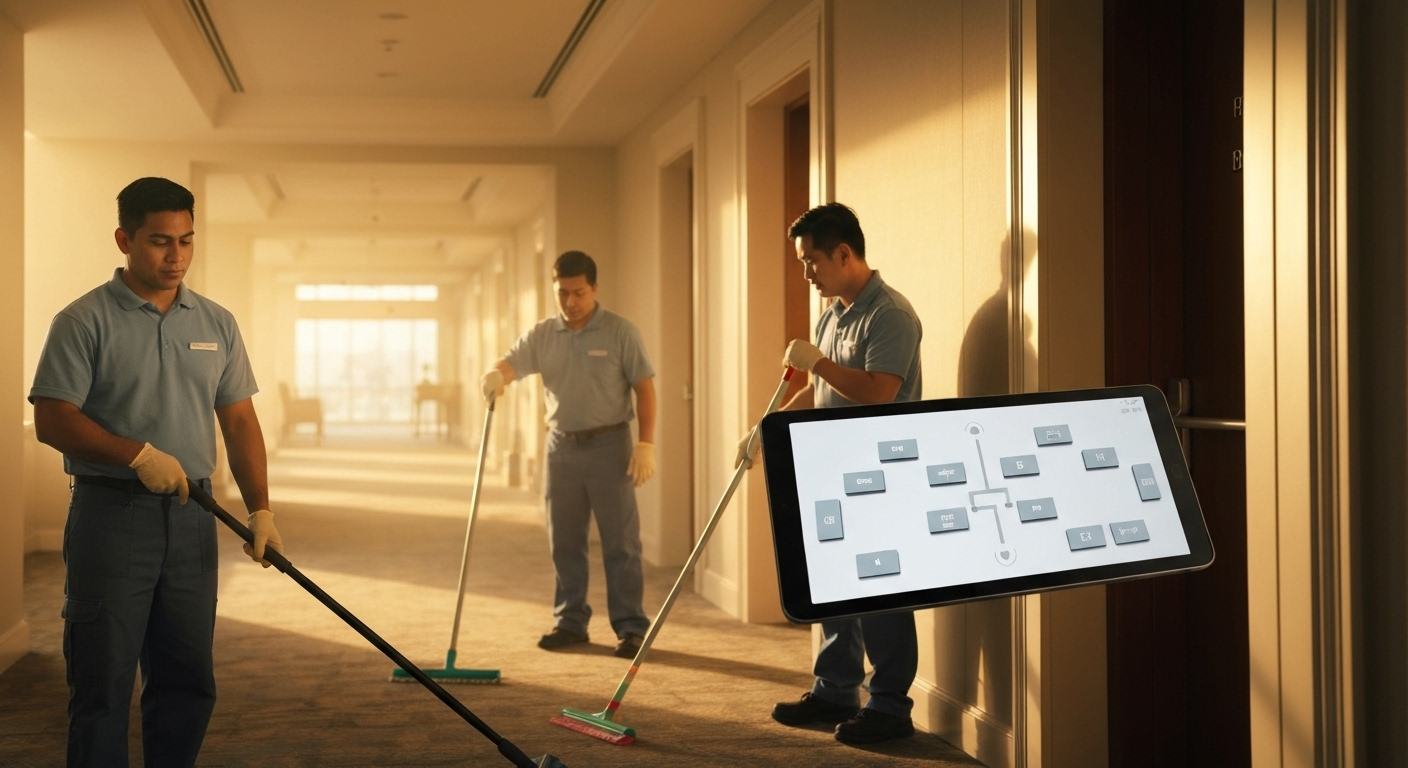
Cleaning has always been a very tangible, boots-on-the-ground kind of business, you know, full of early mornings, tight schedules, and human judgment calls. The industry isn't exactly known for rapid tech adoption, but that's changing fast. After a few years of pilots and quiet experiments, AI is showing up in ways that are both subtle and pretty transformative.
Think about it this way: the job used to be about manpower and repetition. Now it's also about data, prediction, automation. And that's where cleaning business automation starts to matter in a new way. AI isn't a magic wand, but it is a practical tool you can bend to scheduling, routing, quality control, inventory, and client satisfaction.
AI often speeds things up, but it can also feel slower at first.
Why AI matters for cleaning operations right now
Labor shortages, rising customer expectations, and tighter margins are all putting pressure on cleaning companies. At the same time sensors, smart tools, and cheap compute have made it possible to gather useful signals about what actually happens on a job site. When you combine those signals with algorithms, you get workflows that scale better and teams that work smarter, not harder.
You're not just automating one thing. You're linking schedule to travel time, inventory use, client preferences, team skills and even weather or foot traffic. That connection is the core of why ai for service industry applications are showing ROI faster than people expected, at least in mid-sized and larger operations.
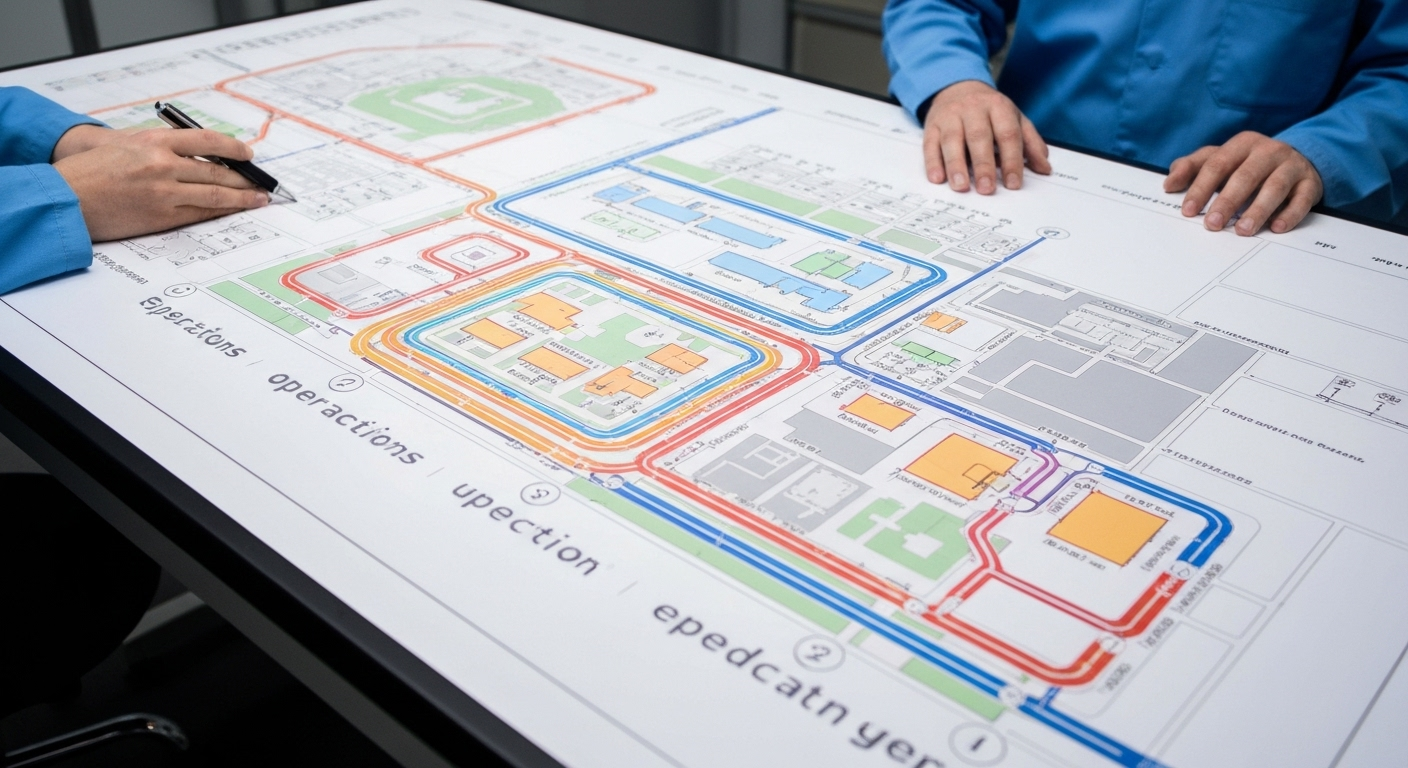
Practical AI uses that actually move the needle
Some implementations are pretty obvious, others are quietly practical. Here's what tends to work in the field (and what tends to cause trouble).
Smart scheduling and dynamic routing
Scheduling is where most cleaning firms see gains first. AI models can predict how long a job will take based on floor area, type of space, previous performance, time of day, and staff skill level. That prediction feeds a scheduler that assigns the right people to the right jobs and calculates travel windows in real time. You get fewer late arrivals, less overtime, and happier clients. This is a classic example of workflow efficiency cleaning—reducing friction so the crew spends more time cleaning and less time waiting or driving.
Predictive inventory and supply optimization
Supplies matter. Running out of a cleaner or using expensive single-use items when a refillable product would do is a tiny leak in profitability that adds up. AI can forecast consumption based on job types, cleaning frequency, and even seasonality (flu season changes everything). That forecast feeds purchasing so you'll buy less rush-expensive stock, and you'll manage warehouse space better.
Automated quality control
Quality used to be a supervisor's job. Now you can use sensors, photos, and simple computer vision to flag missed areas or confirm tasks. It doesn't replace human judgment, but it amplifies it. A supervisor can focus on coaching rather than chasing checklists. Cameras and image models might feel invasive, so be ready to handle privacy concerns (more on that later).
Chatbots and client communication
Clients ask the same five questions repeatedly, in the same tone, at odd hours. Chatbots answer routine queries, confirm appointments, and escalate only when necessary. That lowers admin overhead and keeps clients satisfied without adding staff. You're not replacing the phone person, you're making their day less frantic.

How to start, without blowing the budget
Most companies can't afford a full AI rewrite overnight, and they shouldn't try. Start small, prove value, then scale. Here's a sequence that works in the real world (not theoretical).
Pick one pain point you can measure. Maybe it's late arrivals, or time spent per job, or supply wastage. Use a single AI-enabled tool to address that. Run a two to three month pilot. Measure before and after. If it works, extend. If it doesn't, iterate or abandon that specific approach and try another.
And keep governance simple. Who owns the data, who trains the models, who approves changes? You'd be surprised how many projects stall because leadership forgot to answer those questions.
Organizational trade-offs and real-world constraints
There's a bunch of nuanced trade-offs that people gloss over. AI needs good data. If your timekeeping and job reporting are messy, the model will be too. Fixing data quality can take longer than the model build. You also need staff who'll trust the system. If crews feel like tech is policing them, you get pushback. Training and communication are non-negotiable.
Privacy and compliance are another constraint. Using cameras, or geolocation, or audio requires clear policies and consent, and sometimes legal review. Don't pretend you can wing it. You won't get away with it.
Cost matters. Some solutions are SaaS subscriptions that scale with headcount. Some require hardware and installation. Calculate total cost of ownership and compare it to a realistic projection of efficiency gains, not idealized percentages you'll never hit.
Measuring ROI and the metrics that mean something
Revenue per labor hour and travel time per route are straightforward. But don't stop there. Track job completion accuracy, client retention, rework rates, and supplies cost per job. Pair operational metrics with employee satisfaction. Sometimes a technology that slightly reduces time per job but increases turnover is a net loss. The human factor matters more than executives often admit.
Use A/B tests when you can (one region uses AI scheduling, another sticks with the old method). Run them long enough to smooth weekly seasonality. And beware of vanity metrics, like number of alerts generated by a system, which don't always correlate with value.
Change management and team adoption
Tech adoption is mostly people work, not IT work. You're changing routines and expectations, so take the time to involve supervisors early, make pilots transparent, and iterate on feedback quickly. Offer incentives for adoption that aren't purely punitive. Rewards work better.
I've seen this in my own work.
Training shouldn't be a single session. Make it ongoing, bite-sized, and available on phones. Field coaching beats manuals. Also accept that you'll need a super-user or two who become the local experts. They keep momentum going.
Ethics, privacy and the human element
Clients and staff care about privacy. Cameras and continuous location tracking feel invasive to some people, and they often signal mistrust. Be explicit about what you're collecting, why you collect it, how long you keep it, and who can see it. Where possible, design for minimization -- only collect what you actually use for the model.
AI can introduce bias too. If your scheduling AI always routes the easiest shifts to a favored group, you get unfair outcomes. Monitor fairness and rotate assignments if needed. It's not glamorous, but it's necessary if you want sustainable adoption and a good reputation.
Technology choices and vendor considerations
You'll see a range of vendors selling components that look similar on a glossy slide. The difference is usually integration and support. Choose tools that play nice with your existing systems, or budget for integration work. Prefer modular approaches so you can swap parts out if they underperform.
Ask vendors specific questions about model retraining, data ownership, and downtime. If they can't answer in plain language, that's a red flag. Also evaluate the support model -- who's helping you when the system's predictions go wrong at 2 AM?
What to expect in the next 18 months
AI capabilities are moving fast, but business adoption tends to lag. Expect incremental, not revolutionary, change over the next year. More deployed use cases for scheduling, better APIs, and smarter edge devices are likely. Robots will appear in more niche roles, not replace human cleaners wholesale. The thing is, people often overestimate short term change and underestimate long term change--but that's a cliché for a reason.
Final practical tips
Start with a measurable problem. Pilot small. Involve the crew. Measure real outcomes and be honest about what didn't work. Budget for data cleanup and change management. And don't neglect the human side -- technology's value only shows up when people actually use it.
Adopting AI for the cleaning industry is less about replacing people and more about amplifying outcomes, improving predictability, and making work less grindy. If you're pragmatic, patient, and willing to iterate, you'll probably find it's worth the effort (I think it is, though I might be wrong but that's okay).