Architecture audit
Best first engagement$5–8K flat • 1–2 weeks
Read access to your repo, 30 min with each system owner, a Stripe sandbox copy. Deliverable: written report with severity-tagged findings and a recorded screen-share walkthrough.
For funded AI SaaS startups
I'm co-founder & CTO of BFEAI, a 7-app AI SaaS platform shipping in production today. I take a small number of contract engagements alongside that role.
Live in production today
I'm co-founder & CTO of Be Found Everywhere, Inc. (BFEAI), a production AI SaaS platform running today. The work I do for clients is the work I do every day for myself.
0
Production apps
0K+
Keywords generated
0+
AI scans run
0+
Sites automated

Who you're hiring
Co-founder & CTO, BFEAI
I've spent the last 5 months shipping 7 production AI SaaS apps as co-founder and CTO of BFEAI. I take on a small number of contract engagements alongside that role, working with funded founders past MVP who need senior engineering before they're ready to commit to a full-time hire.
Verified client reviews
Marissa C. hired me to move a production app off Lovable onto infrastructure she fully owns, then hired me again for her second. Both migrated with zero data loss. Keith hired me to build a customer-onboarding portal from scratch, Stripe and CRM included. Every project is live today.
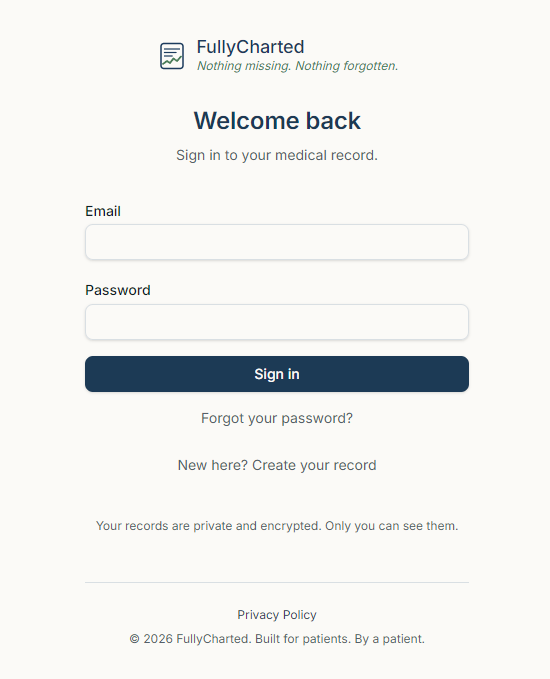
“I came to him as a non-developer with a production health app handling real patient data… What he delivered exceeded every expectation. He handled real patient data with the care it deserved, and went far beyond the scope of what was asked. I'm hiring him immediately for my second app migration and consider him my go-to developer. 5 stars without hesitation.”
Lovable → Vercel + Supabase · 45 tables · 1,345 tests passing · zero data loss
Marissa C.
Founder, FullyCharted
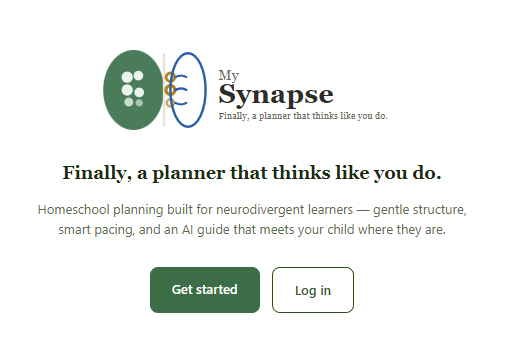
“Bill delivered another exceptional migration, moving MySynapse, my homeschool planning platform, from Lovable Cloud to self-owned Vercel and Supabase. All 43 tables and 2,333 rows migrated perfectly with zero data loss. By the end I had the app running locally, auto-deploy connected, and full confidence to make changes independently. Bill is my go-to developer. Highly recommend!”
Lovable → Vercel + Supabase · 43 tables · 2,333 rows · 5 AI edge functions
Marissa C.
Founder, MySynapse
“Working with Bill has been one of the best hiring decisions I've made. He thinks beyond simply writing code. He considers workflow, maintainability, user experience, security, and the long-term success of the application. He's willing to challenge ideas when he sees a better solution, which is exactly what I wanted in a development partner. Five stars isn't enough.”
Customer onboarding portal · Stripe API · CRM integration · Fixed-price Upwork project
Keith L.
Owner, Professional Auto Appraisals
From the team I ship with
“Bill shipped our Stripe billing redesign (credit ledger, dual-pool drain semantics, idempotent webhooks) in two weeks. The kind of work most teams scope for six. It's been running in production without a single revenue-leak bug.”
Josh B.
Co-founder, BFEAI
“We were about to spin up a separate Supabase project for each app. Bill pushed back, designed the multi-tenant RLS approach across all seven apps, and the entire platform is one cohesive system because of that call. That's the difference between a senior engineer and a fractional CTO.”
Ryan M.
Co-founder, BFEAI
“Bill built cost-tracking, error-tracking, and observability into the LLM orchestration layer before any of it was urgent. When usage grew, we didn't have to rebuild a thing. Most engineers ship the demo. Bill ships the operations.”
George J.
Co-founder, BFEAI
“Shipping seven multi-tenant apps in five months means making the right tradeoff a hundred times a week. Bill is the partner I make those calls with. He pushes back when I'm about to ship something that won't hold up, and he builds the thing the right way once we've agreed on the call.”
Kyle S.
Co-founder, BFEAI
Four ways to engage
Availability
BFEAI runs on an async-first ops cadence, which frees 10–15 hours a week for outside engagements. I take on one or two clients at a time so each gets real focus. Currently accepting 2 new clients.
$5–8K flat • 1–2 weeks
Read access to your repo, 30 min with each system owner, a Stripe sandbox copy. Deliverable: written report with severity-tagged findings and a recorded screen-share walkthrough.
$100–150/hr • 6–8 weeks
Scoped build on your stack: Stripe billing redesign, RAG pipeline, multi-tenant migration, auth hardening. Hourly with a hard cap per phase so you always know the ceiling.
Scoped fixed • typically 4–6 weeks
Most no-code migrations underestimate the state machine the platform was hiding. I plan for that explicitly. Output: maintainable TypeScript that survives load and the next API change.
$8–15K/mo • 10–15 hrs/week
Architecture decisions, hiring help, code review, founder sounding-board. Quarterly review of the engagement shape. For founders who want senior depth on the bench without a full-time CTO comp package.
How I build
Founders hire senior contractors hoping for senior judgment. What they actually need: someone who resists the tooling-of-the-month and ships the smallest thing that holds up under load.
What I default to
What I push back on
Common questions
Two practical differences. First, I'm shipping production code at BFEAI (Be Found Everywhere) every week — a 7-app multi-tenant AI SaaS platform that I co-founded and run as CTO. The work I do for clients is the work I'm doing on my own platform, so the engineering judgment is from someone who's currently making the same tradeoffs you're making. Second, I take on one or two clients at a time. Agencies and marketplaces match you to whoever's available; I either have the capacity or I don't, and you know which side of that you're on before we sign.
Architecture audit engagements are 1 to 2 weeks fixed. Build engagements are typically 6 to 8 weeks per phase, billed hourly with a hard cap per phase. Fractional CTO retainers are month-to-month with a 30-day notice on either side. If we're a fit, most engagements grow from an audit into a build phase, then into a retainer. If we're not, the audit deliverable is yours to act on with someone else, and you owe nothing past the original audit fee.
Yes to NDAs, standard mutual-NDA template or yours. Yes to IP assignment of work product I do during the engagement — that's table stakes. I push back on (a) non-compete clauses that try to restrict my work with other clients in adjacent industries, (b) IP assignment of pre-existing tooling I bring to the engagement, and (c) penalty clauses that aren't reciprocal. Almost every client agrees to those carve-outs on first read.
Yes for most states. I'm a single-member LLC (BoostFrame, LLC) based in New Jersey. California has its own AB5 considerations — I can still work as a 1099 there for B-to-B engineering work that meets the ABC test, but if you're in CA and concerned, we can run the engagement through a contracting platform (Deel, Remote, etc.) that handles classification for you.
I don't take primary on-call rotation for any client. Secondary or escalation rotations during a build phase or active migration are fine, with clear paging rules and a documented escalation path. Most clients realize partway through the audit that what they actually want is to fix the underlying problem causing the pages, not to add another paging-eligible engineer to the rotation. That's usually a better engagement scope.
Everything I write lives in your repo from day one. There's no parallel codebase I keep on my side. At the end of any engagement you get: (a) the code in your repo, (b) a written handoff doc covering architecture decisions and operational gotchas, (c) any internal docs / runbooks created during the engagement, (d) a 1-hour walkthrough with whoever inherits the work. The handoff doc is the part most contractors skip — it's the difference between a successful exit and an engagement-shaped hole in your codebase.
Default: TypeScript on Next.js, Postgres or Supabase for data, Stripe for billing, real-code where it matters. Python only where it's the right tool — browser fleets, ML serving, data pipelines. LLM APIs whichever fits the use case (ChatGPT, Claude, Gemini, Perplexity, AI Mode — at BFEAI we orchestrate all six). If your stack is meaningfully different (Ruby, Go, Elixir, etc.) we should have a separate conversation about whether I'm a fit.
Architecture audit: $5,000 to $8,000 flat for 1 to 2 weeks. Build engagements: $100 to $150 per hour with a hard per-phase cap, so a typical 6 to 8 week phase runs $25,000 to $50,000. Fractional CTO retainer: $8,000 to $15,000 per month for 10 to 15 hours per week of architecture, hiring help, and code review. Most funded clients land in the middle of those ranges and the budget conversation is rarely the blocker — the bigger question is usually whether the scope is right.
Honest answer: usually no. Pre-funded teams need to spend dollars on product and customer development, not on a senior contractor. If you're pre-PMF, the right move is usually a co-founder, not a contractor. I'll happily do a 30-minute call to confirm that's true for your specific situation and point you toward better-fit resources if so.
A 15-minute call. No deck, no slides. We talk about what you're shipping, where engineering is the bottleneck, and whether the shape of this work makes sense for either of us. Either way, you walk away with a senior engineer's read on your situation.
Free. No deck, no slides. We talk about what you're building, where engineering is the bottleneck, and whether this shape of work makes sense for either of us. Either way, you walk away with a senior engineer's read on your situation.
Or email bill@boostframe.io with a sentence on what you're building.